

Hoverflies : Well its only nature
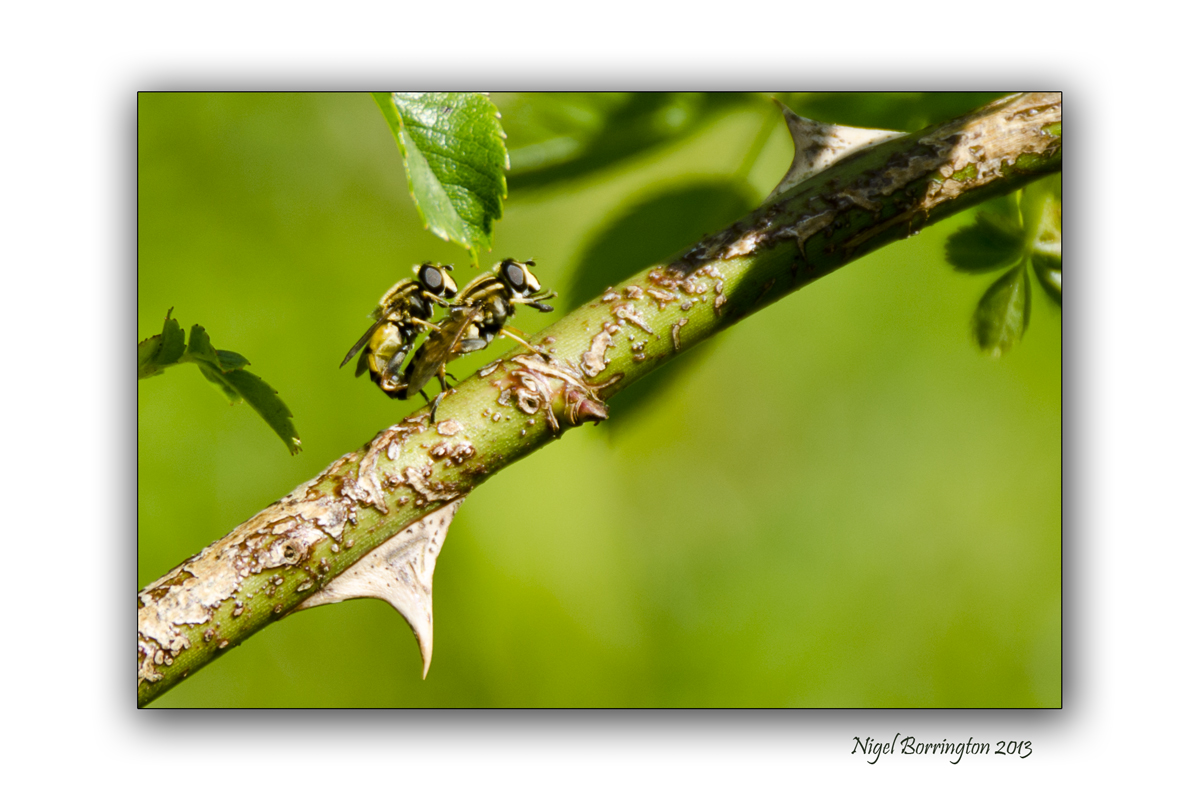
Nikon D7000, 105mm Macro lens, iso 100
Two hover-flies
Nature photography : Nigel Borrington
Hoverflies
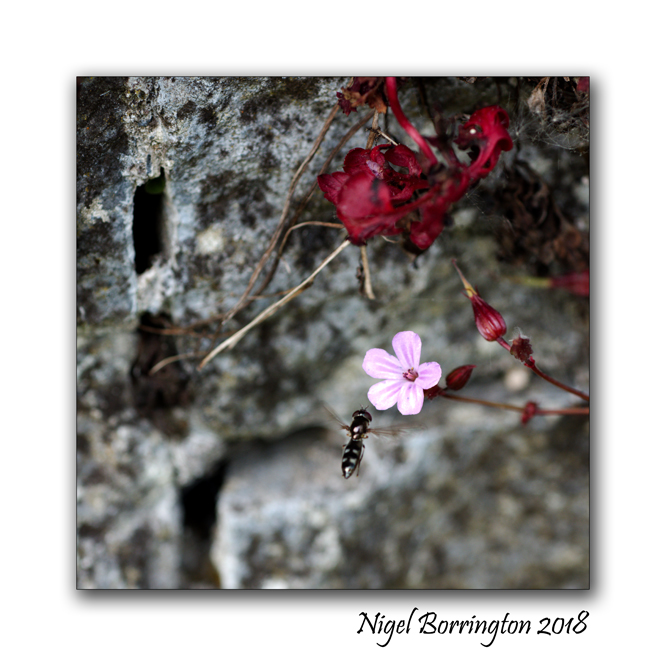
Hoverflies, sometimes called flower flies or syrphid flies, make up the insect family Syrphidae. As their common name suggests, they are often seen hovering or nectaring at flowers; the adults of many species feed mainly on nectar and pollen, while the larvae (maggots) eat a wide range of foods. In some species, the larvae are saprotrophs, eating decaying plant and animal matter in the soil or in ponds and streams. In other species, the larvae are insectivores and prey on aphids, thrips, and other plant-sucking insects.
Aphids alone cause tens of millions of dollars of damage to crops worldwide every year; because of this, aphidophagous hoverflies are being recognized as important natural enemies of pests, and potential agents for use in biological control. Some adult syrphid flies are important pollinators.
About 6,000 species in 200 genera have been described. Hoverflies are common throughout the world and can be found on all continents except Antarctica. Hoverflies are harmless to most other animals despite their mimicry of more dangerous wasps and bees, which serves to ward off predators.
Hoverfly feeding
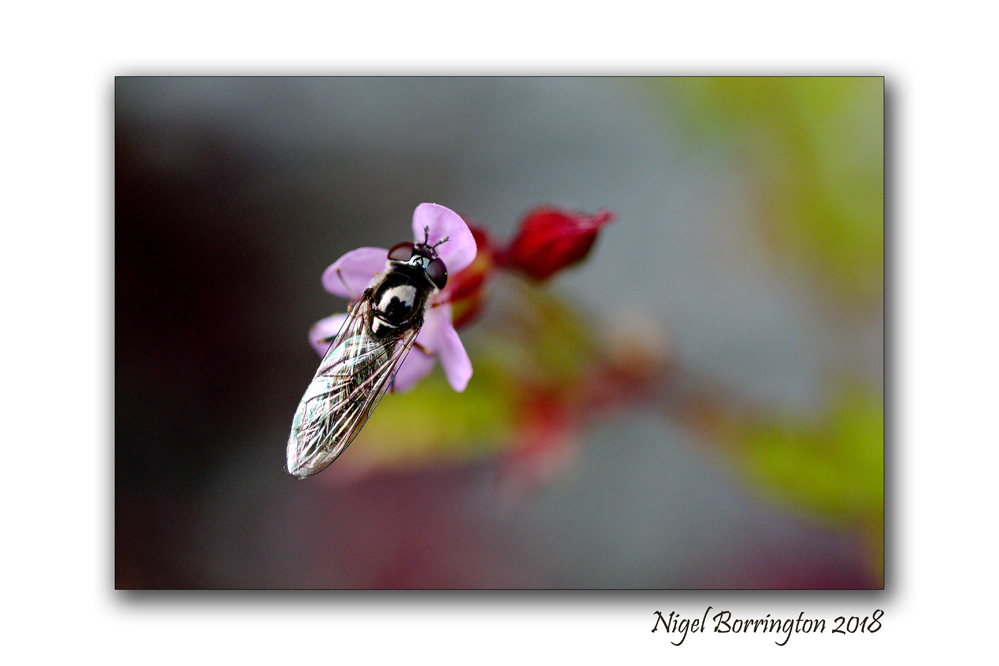
Syrphus ribesli (Hover fly)

Syrphus ribesli
Nikon D90, 105mm macro lens
Hover fly – feeding on nectar.
Taken hand held using a very shallow depth of field from the Nikon 105mm f2.8 lens, so that I could focus in on the fly s head as it fed.
Kilkenny wildlife, Ballykeefe woods
 Nigel Borrington
You must be logged in to post a comment.